Hot Wine
A completely unnecessary reinvention of something people figured out centuries ago.
Most years, inspired by the darkest days of the year and a love of spirits, I craft a batch of creatively themed holiday cocktail recipes. But this year, I looked at the state of things, looked at my calendar, and decided to make something hot, easy, and extremely drinkable.
I’ve added a Pacific Northwest spin, selected a not-entirely-unique blend of spices, and am presenting it as if it’s a bold new idea. You’re welcome!
A Brief History of Heating Wine
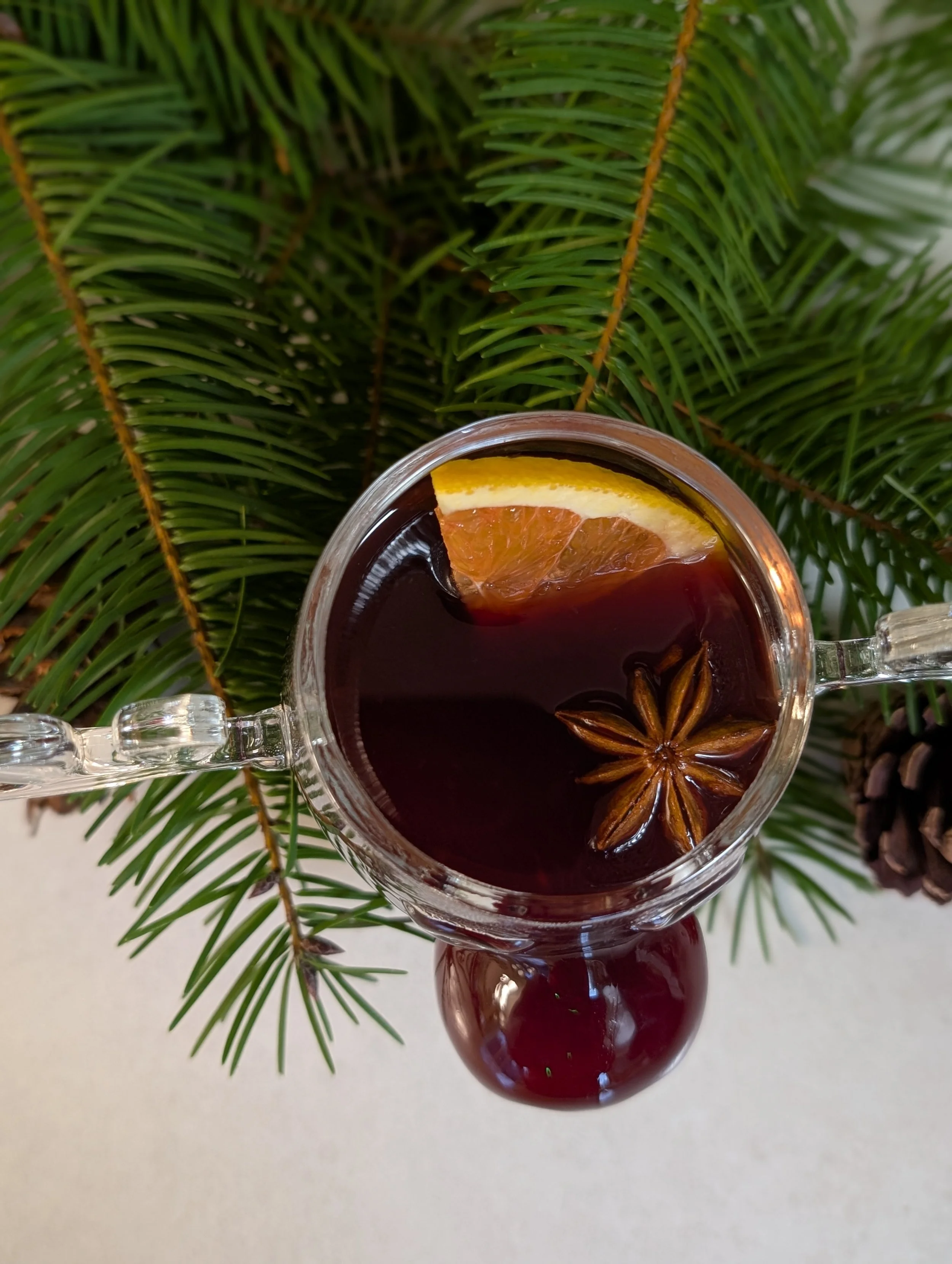
Hot wine started as medicine. The Romans were warming wine with honey and spices as early as the 2nd century, calling it conditum paradoxum. This was partly for health, partly to make rough wine drinkable, and partly because winter has always been dark and depressing AF. Through the Middle Ages, spiced wine spread across Europe, especially among people who could afford spices and didn’t enjoy suffering. Eventually, hot wine became tradition.
Hot Wine, By Many Names
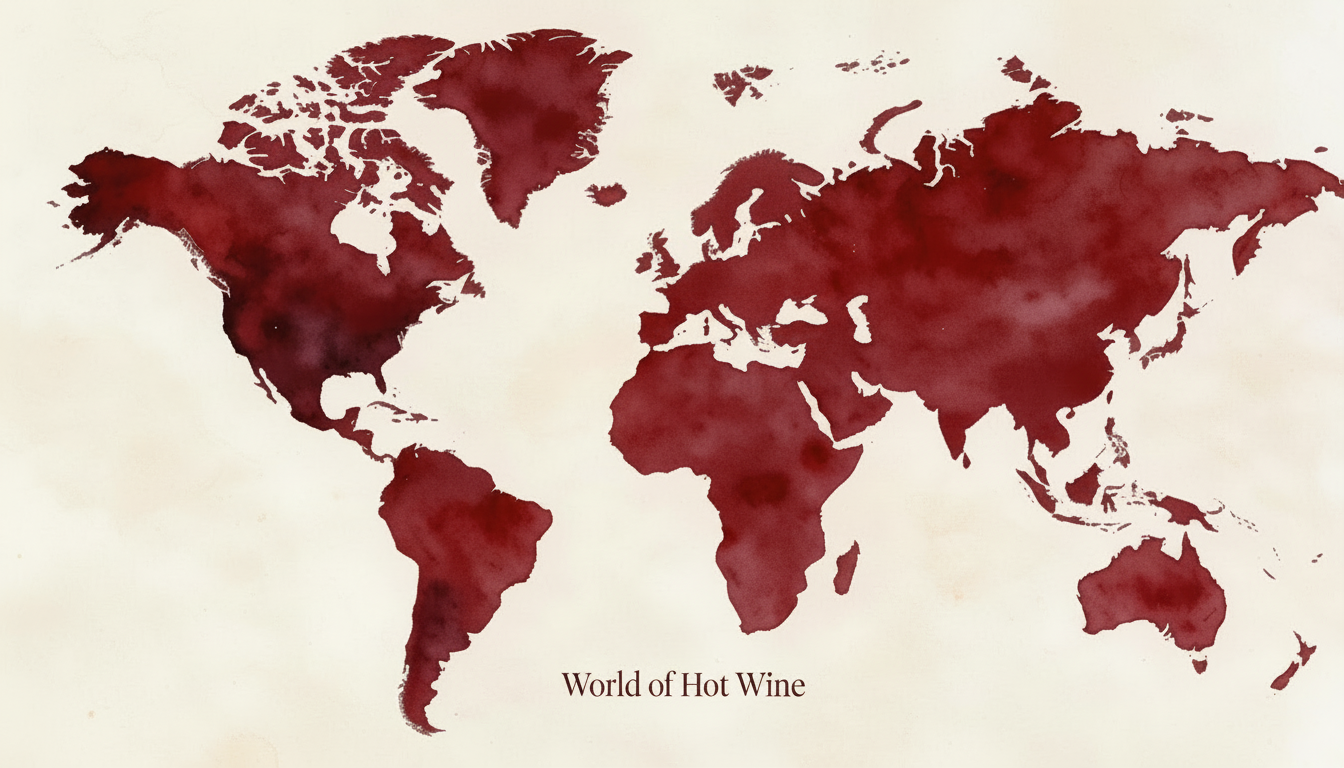
As this tradition spread, most cultures gave their own variety of hot wine a unique name:.
Glühwein (Germany, Austria): Literally “glowing wine.” Served at Christmas markets. Usually red wine with citrus, cinnamon, cloves, and sugar. Sometimes fortified.
Vin chaud (France): Literally “hot wine.” Drier, citrus-forward, and very ski-adjacent.
Glögg / Gløgg / Glögi (Sweden, Norway, Finland, Estonia): Loosely “heated wine.” Richer and heavier, with cardamom, cloves, and often an added spirit. Frequently served with almonds and raisins.
Vin brulé (Italy): Literally “burnt wine.” Heated with spices and citrus, and sometimes briefly set on fire to burn off alcohol vapors.
Bisschopswijn (Netherlands): “Bishop’s wine.” Traditionally associated with Sinterklaas rather than Christmas.
Mulled wine / mulled claret (United Kingdom & Ireland): “Mulled” meaning heated and spiced. Usually fortified.
Forralt bor / grzane wino / svařák (Hungary, Poland, Czech Republic): Variations on “boiled wine.”
Vino navega’o (Chile): “Sailing wine,” named for the orange slices that float in the pot. A Southern Hemisphere winter tradition.
Greyano vino / izvar (Bulgaria, Moldova): Literally “heated wine,” often sweetened with honey and sometimes spiked with black pepper.
The unifying theme: when it’s dark and cold, hot wine is festive and a fun antidote to seasonal depression.
My Extremely Serious Contribution to This Legacy
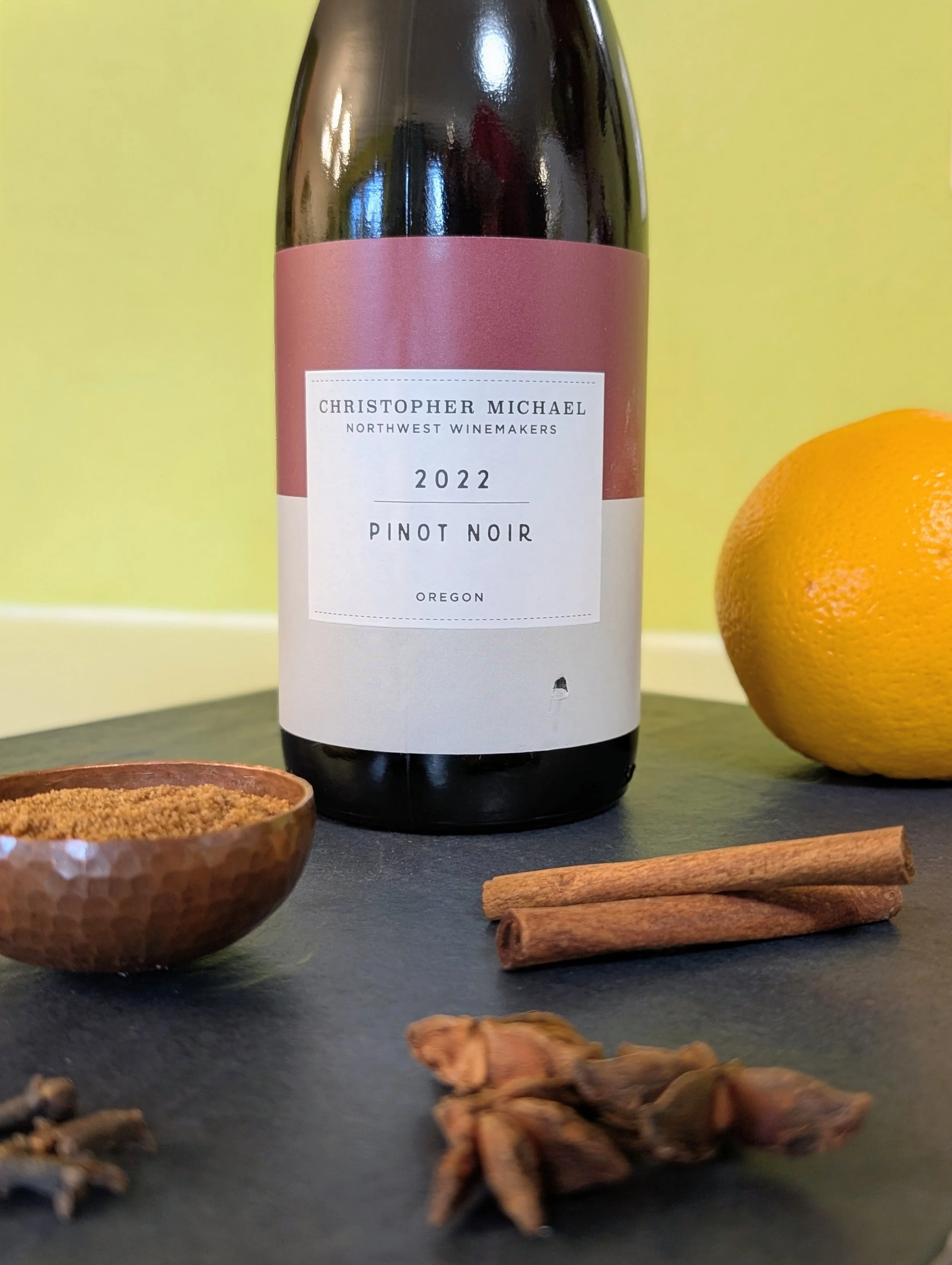
Here’s my version. It uses Pinot Noir, because I live in Oregon. It leans into cardamom and Cara Cara oranges, and is sweetened with coconut sugar, which gives it a richer, earthier flavor profile.
Hot Wine Recipe
Ingredients
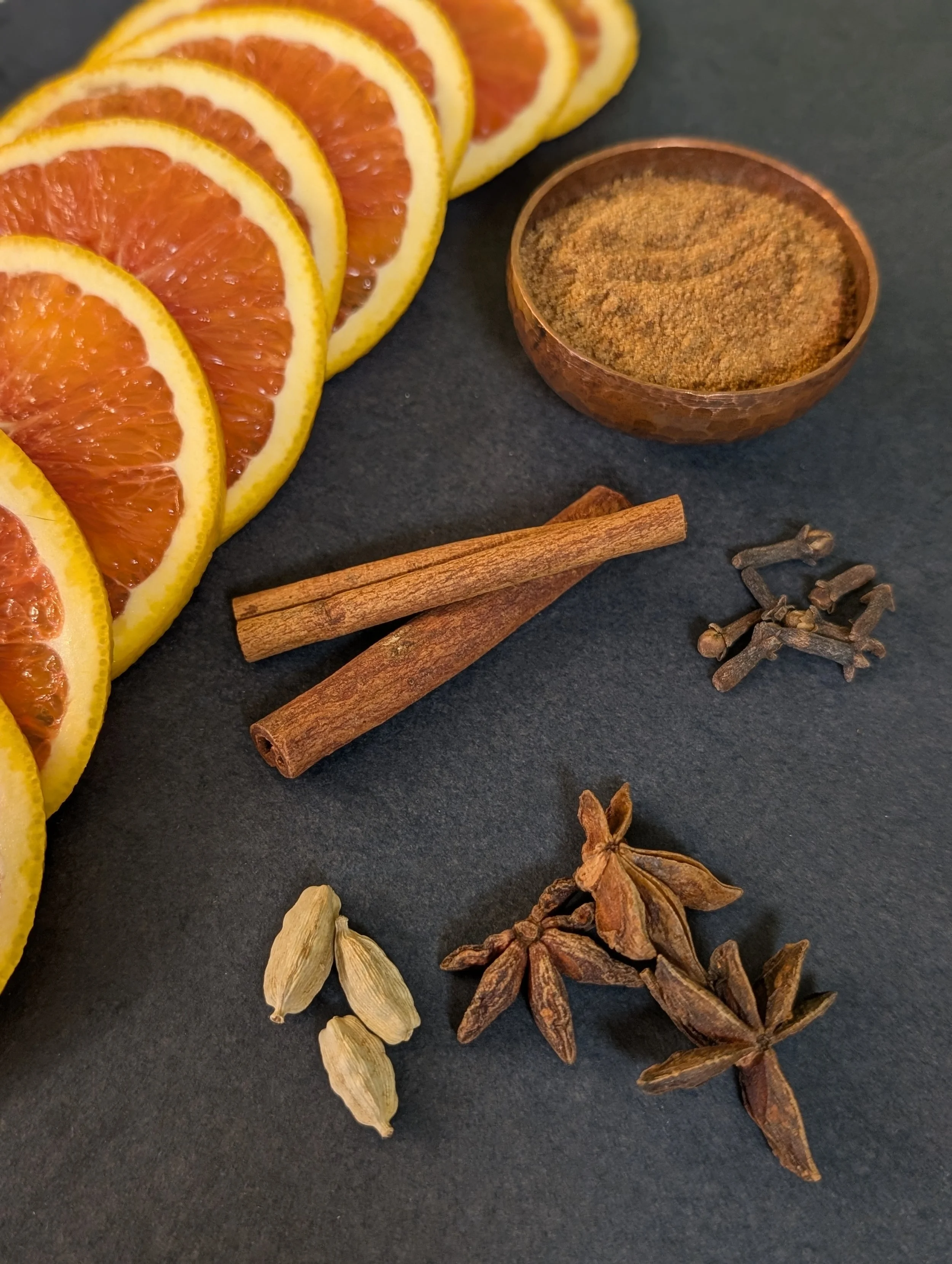
1 bottle Pinot Noir
2 tablespoons coconut sugar
2 cinnamon sticks
2–3 star anise
3 cardamom pods, smashed
8 whole cloves
1 Cara Cara orange, sliced into rounds (for the pot)
1 Cara Cara orange, sliced into half-slice (for garnish)
Instructions
Put everything except the garnish oranges into a pot.
Turn heat to low (around a 3) and let it warm for about 20 minutes, covered and stirring occasionally.
You want steam and tiny bubbles - don’t boil off the alcohol!
Ladle into mugs. Garnish with a half slice of orange.
Garnish! Add a single star anise or a few cloves to the glass. I don’t suggest sticking a whole stick of cinnamon into your cup because it can be overpowering but you do you!
Optional: Top it off with a splash of brandy.
Leave the burner on the lowest heat to keep it warm. You’re going to want a second serving!
But wait, there’s more…
You didn’t think I’d stop there, did you? Here’s an even DEEPER dive into the World of Hot Wine!
Western & Central Europe
Germany – Glühwein (“glowing wine”)
A Christmas-market staple made with red wine, citrus, cinnamon, and cloves.Austria – Glühwein (“glowing wine”)
Similar to Germany’s, sometimes fortified for extra warmth.France – Vin chaud (“hot wine”)
Drier and citrus-forward, especially common in ski towns.Switzerland – Glühwein / vin chaud
A blend of German and French traditions.Italy – Vin brulé (“burnt wine”)
Aromatic and sweet; sometimes briefly flamed during preparation.Netherlands – Bisschopswijn (“bishop’s wine”)
Traditionally associated with Sinterklaas rather than Christmas.Portugal – Vinho quente / porto quente (“hot wine”)
Often made with Port or Madeira, resulting in a richer, sweeter drink.Spain (regional) – Vino caliente (“hot wine”)
Less formal than sangria but appears in colder regions during winter.United Kingdom – Mulled wine / mulled claret
Typically spiced with citrus and often finished with brandy.Ireland – Mulled wine
Similar to the British version, frequently fortified with whiskey or brandy.
Nordic & Baltic
Sweden – Glögg (“heated wine”)
Cardamom-forward and often served with almonds and raisins.Norway – Gløgg
Slightly lighter than Swedish versions but similarly spiced.Denmark – Gløgg
A close cousin to Swedish glögg with a comparable spice profile.Finland – Glögi
Often sweeter; sometimes made with juice instead of wine.Estonia – Glögi
Wine- or juice-based and heavily spiced.Latvia – Karstvīns (“hot wine”)
A simple, classic spice blend.Lithuania – Glintveinas / karštas vynas (“mulled wine” / “hot wine”)
Often includes almonds and raisins.
Eastern & Southeastern Europe
Poland – Grzane wino (“heated wine”)
Shares its spice profile with the country’s mulled beer traditions.Czech Republic – Svařák (“boiled wine”)
A Christmas-market classic.Slovakia – Svařené víno (“boiled wine”)
Closely aligned with Czech traditions.Hungary – Forralt bor (“boiled wine”)
Often made with Egri Bikavér (“Bull’s Blood”) wine.Romania – Vin fiert (“boiled wine”)
Spiced with nutmeg and anise.Bulgaria – Greyano vino (“heated wine”)
Notable for the addition of honey and black pepper.Moldova – Izvar (“heated wine”)
Simple but punchy, also using honey and pepper.Croatia – Kuhano vino (“cooked wine”)
White mulled wine is more common here than elsewhere.Serbia – Kuvano vino (“cooked wine”)
Made with either red or white wine.Russia – Glintwein (from Glühwein)
German-style influence in both name and flavor.Turkey – Sıcak şarap (“hot wine”)
Sweetened and citrus-heavy.
Anglo World & New World
United States – Mulled wine
Strongly influenced by British traditions.Canada – Mulled wine
Common at winter festivals and holiday markets.Australia – Mulled wine / Glühwein
Popular during winter and “Christmas in July.”New Zealand – Mulled wine
European-style winter warmer, especially in ski regions.
Latin America
Chile – Vino navega’o / candola (“sailing wine”)
Named for the orange slices that float in the pot.Argentina (regional) – Vino caliente (“hot wine”)
Served during cold Patagonian winters, often alongside asado.
Historical & Old-World Cousins
Medieval Europe – Hippocras
A medicinal spiced wine named after Hippocrates.England (historic) – Wassail (“be well”)
Often cider-based, but historically wine also appeared.

Final Thoughts
Calling this a recipe feels generous, but hot wine is arguably the most traditional holiday drink. Have I made a meaningful improvement on something ancient? No, but I enjoy it. It warms me inside and out, and smells like Christmas and magic.
If you like my take on hot wine, or enjoyed learning about this ancient tradition, let me know in the comments!